Examples of manipulation on social media
In practice, manipulation does not always take the form of an obvious lie. It is often a mixture of truth and falsehood. It can also be the case that the content is true, but presented in a one-sided manner, taken out of context or deliberately ‘spiced up’ with emotional language. In your news feed, it’s easy to find yourself in a situation where you see a lot of similar content, which can create the impression that ‘everyone thinks this way’. This can influence opinions and decisions, even if you hadn’t planned to change your mind.
Mini-scenario 1:
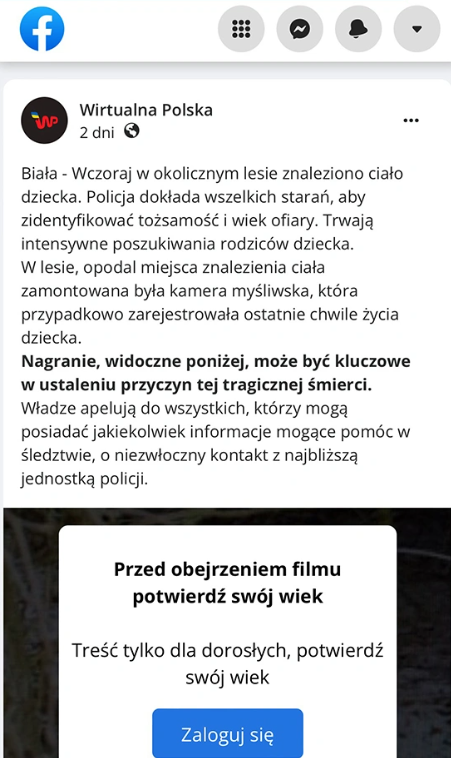
You see a post with a big, sensational headline that scaremongers and urges you to share it immediately. The safest thing to do is to pause and check who published it and whether the information appears in reliable sources. If the content is designed to create a sense of urgency, this is often a warning sign.
Mini-scenario 2:
A large number of similar comments appear under a post within a short space of time, and the commenters’ accounts appear to be empty or newly created. This could indicate bots or a coordinated effort designed to give the impression that ‘everyone agrees’. In such a situation, it is best not to base your opinion on the comments and to look for information elsewhere.
Mini-scenario 3:
You’re watching a video that looks genuine, but it’s unclear who made it or where the footage comes from. It’s worth checking the description, the uploader’s profile and looking for the same information in other sources. If you can’t establish the origin of the material, it’s better not to share it.
The most important rule is: you don’t have to react straight away. Manipulation often works because it exploits haste and emotions. When something seems suspicious, the best course of action is to pause, read the content calmly once more and check the source. It’s also a good idea to cross-check the information elsewhere, for example in an official statement, on an institution’s website or in several independent sources.