On cybersecurity, AI, and the digital inclusion of people aged 55+
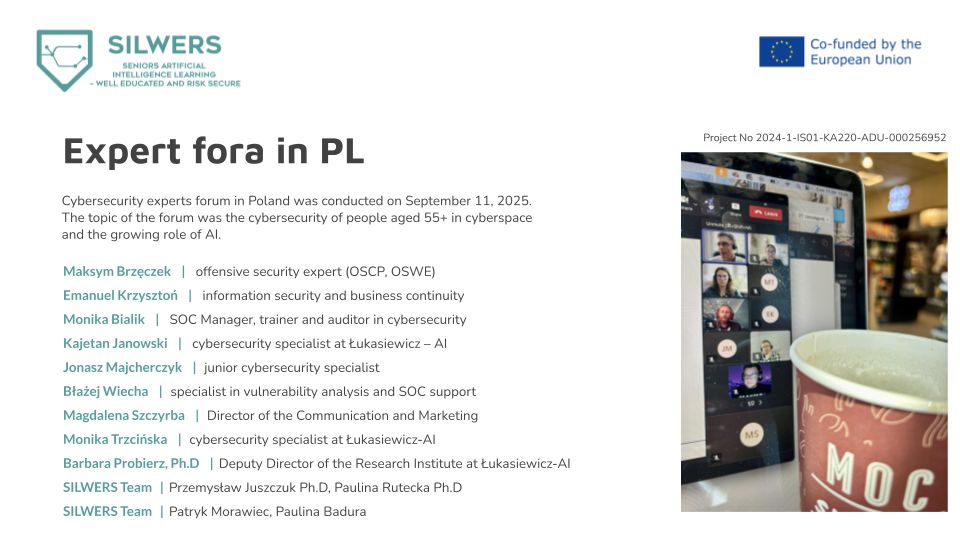
As part of the SILWERS project, we organized an expert forum dedicated to cybersecurity and the impact of artificial intelligence on the daily lives of seniors in the digital world. The meeting brought together IT cybersecurity specialists and educators who jointly analyzed current online threats as well as those likely to emerge in the near future.
As part of the SILWERS project, we organized an expert forum dedicated to cybersecurity and the impact of artificial intelligence on the daily lives of seniors in the digital world. The meeting brought together IT cybersecurity specialists and educators who jointly analyzed current online threats as well as those likely to emerge in the near future.
Key discussion topics
During the meeting, experts worked on identifying the key threats that internet users encounter most frequently today, as well as the trends that will shape the cyber threat landscape in the near future. Particular attention was paid to situations where seniors may be more vulnerable to manipulation, scams, or errors resulting from a lack of confidence in the digital environment.
The discussions also addressed the barriers that prevent individuals aged 55+ from using online services freely and safely. Panelists discussed, among other things, issues of trust in technology, the fear of making a costly mistake (e.g., in online banking), as well as psychological and social factors that influence the readiness to learn how to use new tools.
Digital competencies of seniors and the role of AI
An essential part of the forum was the discussion on competencies that are currently crucial for safe participation in digital life. Experts pointed out that, in addition to technical basics (e.g., recognizing suspicious messages or verifying sources), habits are equally important: caution in sharing data, understanding persuasion mechanisms, and the ability to ask for support when in doubt.
We also discussed artificial intelligence—both in the context of risks (e.g., increasingly credible scams and automatically generated content) and benefits. Panelists shared real-life examples: stories of cybercrime victims, as well as cases where AI-based solutions genuinely help users (e.g., in accessibility, making services easier to use, and supporting daily tasks).
The expert forum is an important step for the SILWERS project toward creating solutions and educational activities that respond to the real needs and concerns of older adults. The conclusions gathered are intended to help us better design communication, materials, and recommendations regarding online safety and the confident, informed use of new technologies.
Soon, we will publish a summary of the key findings and expert recommendations. We encourage you to follow our updates – we will return with specific tips and work results.