Staged photos – what to look out for
Example 2: The ‘poor birthday boy’ trap and ‘like’ farms
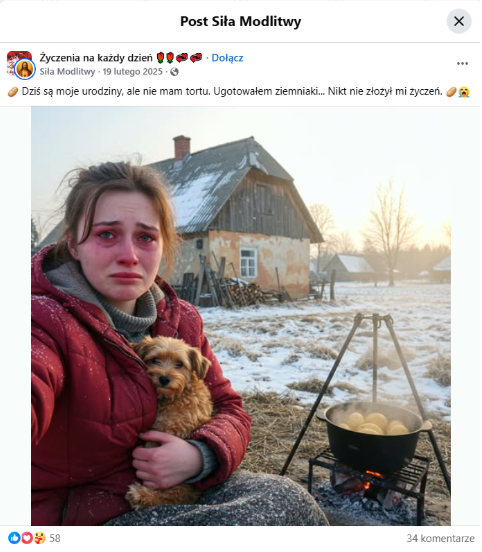
Perhaps you’ve come across a post on Facebook featuring a photo of an elderly person or a sad child, with the caption: ‘It’s my birthday today, but nobody has wished me a happy birthday’. This is one of the most common traps, designed to stir up your emotions and elicit a reaction.
Why do scammers do this?
Criminals deliberately make us feel a strong sense of compassion to lull us into a false sense of security. When you comment “Happy birthday!” under such a post or click “Like”, you’re helping the scammer:

- You increase the profile’s reach: The more comments there are, the more people see the post.
- You create a ‘like farm’: Once such a profile has gained thousands of followers, it becomes valuable to criminals.
- Selling the account: The profile owner can sell it later. The new owner changes the page’s name and uses it for scams, such as phishing for bank details, having a ready-made audience who ‘trust’ them.
Exaggerated emotions as a red flag:
Apart from technical errors, artificial intelligence deliberately generates exaggerated emotions in such images. Look out for unnaturally reddened eyes, extremely tear-stained faces and facial expressions designed to evoke pity and sympathy in you at all costs.
Why does this work?
Scammers know that when we’re overcome by strong compassion, our brain focuses on our emotional response rather than logical thinking. That’s precisely why we’re more likely to overlook the fact that the whole situation is fake.